
How Ultrasound is Becoming One of Healthcare's Most Intelligent Clinical Platforms
27-8-2026

From Imaging to Intelligence
For decades, ultrasound has been one of healthcare's most trusted diagnostic tools, enabling clinicians to visualise anatomy quickly, safely and without ionising radiation.
Today, however, ultrasound is evolving into something far more powerful than an imaging modality alone.
Driven by advances in artificial intelligence, premium imaging technologies, point-of-care solutions and connected healthcare ecosystems, ultrasound is becoming an intelligent clinical platform that helps clinicians diagnose with greater confidence, improve workflow efficiency, and deliver better patient outcomes.
The future of ultrasound is no longer defined solely by image quality; it is defined by how intelligently those images support clinical decision-making.
Increasingly, the quality and precision of ultrasound data itself is becoming a critical factor in enabling AI-powered healthcare. Advanced ultrasound technologies provide the high-resolution, real-time imaging information that intelligent algorithms require to recognise anatomical structures, identify abnormalities and support clinicians during complex procedures.
“Companies such as Oldelft Ultrasound are helping accelerate this transformation by developing highly specialised transducer technologies designed for next-generation clinical applications.
Oldelft's expertise in miniaturised, high-performance ultrasound probes provides the foundation for AI-driven imaging workflows, where advanced hardware and intelligent software work together to deliver greater diagnostic confidence and procedural precision,” says Erwin Dumay, Managing Director at Oldelft Ultrasound.
Intelligence is redefining diagnostic confidence
Image quality remains the foundation of every ultrasound examination, but today's most significant innovation lies in how technology assists clinicians throughout the diagnostic process.
AI-enabled ultrasound platforms are transforming examinations by automatically recognising anatomical structures, optimising image acquisition, guiding probe positioning and performing complex measurements with remarkable speed and consistency. These capabilities reduce variability between operators, whilst allowing clinicians to spend more time focusing on patients rather than system navigation.
Whether assessing cardiac function, monitoring foetal development or evaluating abdominal pathology, intelligent automation is helping deliver faster, more reproducible examinations without compromising clinical accuracy.
Rather than replacing clinical expertise, AI is becoming an extension of it, supporting clinicians in making confident decisions, particularly in busy healthcare environments where efficiency and consistency are essential.
The evolution of AI in ultrasound depends heavily on the availability of exceptionally clear, high-quality imaging data. Advanced transducer technologies are enabling this next generation of clinical intelligence by capturing detailed real-time anatomical information that AI algorithms can analyse and interpret.
“Oldelft Ultrasound's miniaturised 4D transducer technology is designed to provide the high-resolution, real-time volumetric imaging required for increasingly advanced clinical applications. More than a component within a single product, this technology represents a platform for innovation, providing the foundation from which future ultrasound solutions can benefit. By combining sophisticated transducer design with advances in AI, image processing and clinical workflow, Oldelft is helping create the technological foundation for the next generation of intelligent ultrasound,” says Erwin.
Premium imaging where clinicians need it most
Ultrasound is no longer confined to radiology departments.
Advances in portability and system design are bringing premium imaging capabilities closer to the patient than ever before. From comprehensive cart-based systems supporting specialist imaging to highly portable Point-of-Care Ultrasound (POCUS) solutions, clinicians now have access to high-quality imaging wherever critical decisions need to be made.
Emergency departments use ultrasound to rapidly assess trauma patients. Anaesthetists rely on ultrasound guidance for safer regional anaesthesia and vascular access. Cardiologists use advanced imaging to evaluate cardiac function in real time, while obstetricians and gynaecologists continue to benefit from increasingly sophisticated foetal and women's health imaging.
For healthcare providers serving rural or resource-constrained communities, portable ultrasound systems are also expanding access to diagnostic services, reducing unnecessary referrals, and enabling earlier intervention.
The ability to bring diagnostic confidence directly to the bedside is fundamentally changing how care is delivered.
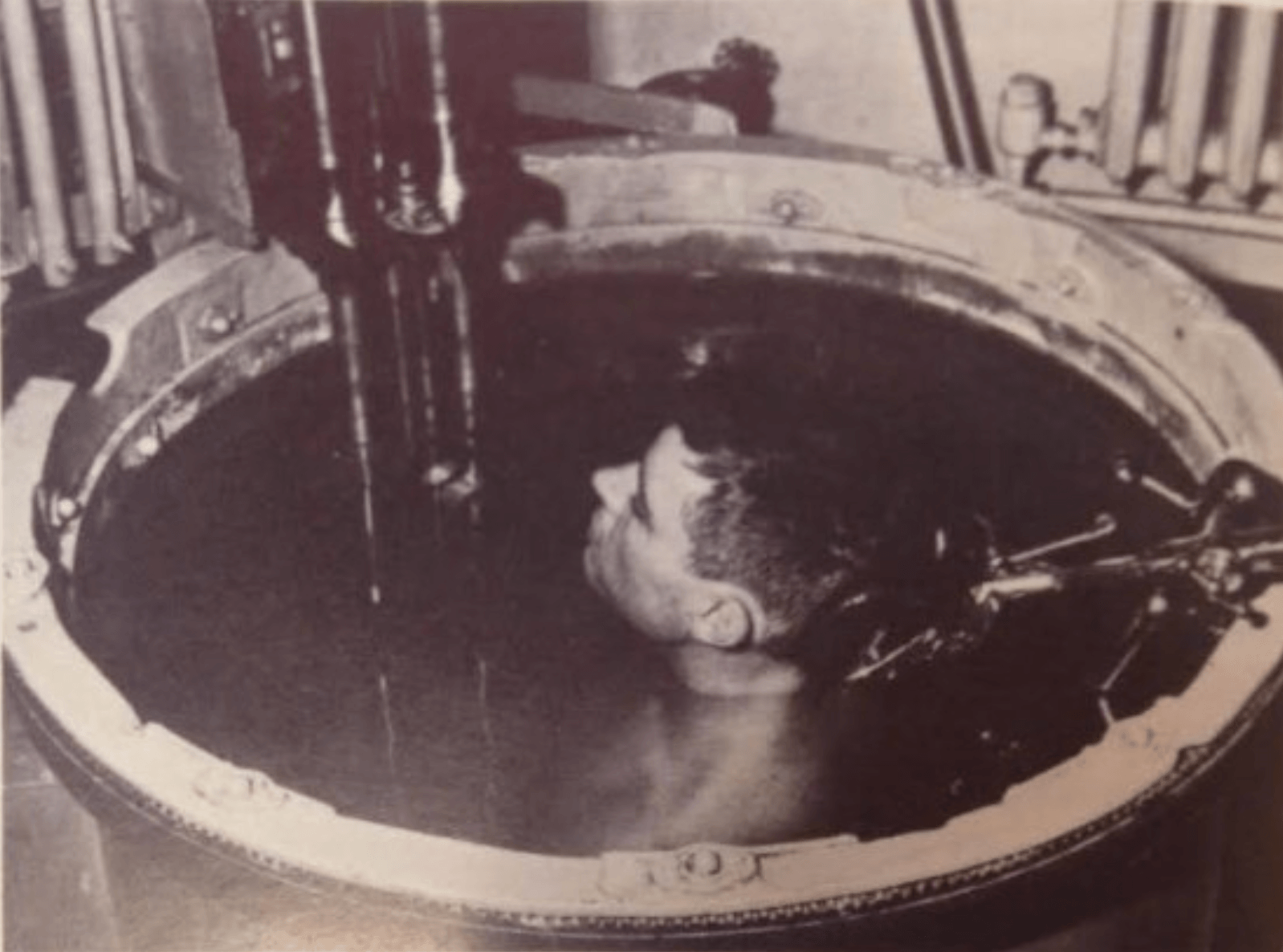
In the 1950s Douglass Howry's team was focused on "mapping" the human body using ultrasound. The bath was successful, but not very practical. This is C. R. Cushman, an electric engineer on the project. Image from "Medical Diagnostic Ultrasound: A Retrospective on Its 40th Anniversary" published in 1988 by Kodak Eastman with the National Museum of American History.
Workflow is becoming a competitive advantage
Healthcare systems worldwide face increasing patient volumes, workforce shortages, and growing pressure to improve operational efficiency. Modern ultrasound systems are addressing these challenges through intelligent workflow design.
Automated measurements, protocol-driven examinations, customisable user interfaces, and seamless integration with hospital information systems are helping clinicians complete examinations more efficiently while maintaining consistently high diagnostic quality.
These improvements may appear incremental individually, but across hundreds of daily examinations they translate into significant gains in productivity, shorter patient waiting times and more time for meaningful patient interaction.
The conversation is shifting beyond image acquisition toward creating a smarter clinical workflow from examination through to reporting.
Advanced technologies are expanding clinical possibilities
Ultrasound is becoming increasingly sophisticated, providing clinicians with more than conventional grey-scale imaging.
Technologies such as elastography allow clinicians to assess tissue stiffness non-invasively, supporting the diagnosis of liver disease, breast lesions, and thyroid abnormalities. Contrast-enhanced ultrasound provides detailed visualisation of blood flow and organ perfusion without exposing patients to ionising radiation, while advanced Doppler technologies and 3D/4D imaging continue to enhance diagnostic capability across multiple clinical specialties.
These innovations provide clinicians with richer clinical information, supporting earlier diagnosis and more personalised treatment planning.
Beyond diagnostic imaging, advanced ultrasound technologies are also opening new possibilities in complex surgical environments. Oldelft Ultrasound's participation in the EU-backed SEISMIC consortium demonstrates how next-generation ultrasound development is extending into AI-supported and robotic-assisted procedures.
Within the consortium, Oldelft Ultrasound is contributing its expertise in advanced probe technology to the development of a specialised 4D ultrasound probe for brain tumour surgery. This application relies on the seamless integration of miniaturised ultrasound hardware, AI-based image processing, and robotic-assisted surgical instruments to provide surgeons with enhanced real-time visualisation and guidance during extraordinarily complex procedures.
This convergence of imaging, artificial intelligence and surgical robotics represents a significant step toward a future where ultrasound becomes an active intelligence platform supporting clinicians throughout diagnosis, intervention, and treatment.
Connected healthcare is shaping the future
As healthcare becomes increasingly digital, ultrasound is evolving into a connected diagnostic platform.
Cloud-enabled image management, tele-ultrasound capabilities and integration with electronic medical records are making collaboration between specialists faster and more efficient. Remote consultation and expert review are extending specialist expertise beyond traditional hospital environments, helping improve access to quality healthcare regardless of location.
The combination of intelligent imaging and connected workflows is creating new opportunities for faster diagnosis and more coordinated patient care.
Technology should work for clinicians
Innovation is only valuable if it improves the experience of those using it every day.
“As ultrasound technology continues to evolve, the opportunity is not simply to generate more detailed images, but to bring together imaging, AI, workflow and connectivity in ways that can make clinical decision-making more intuitive and efficient. We see the integration of these technologies as an important part of the future of ultrasound — one where increasingly sophisticated imaging capabilities work together to support clinicians and simplify complex examinations,” says Michiel Baas, Research & Development Manager at Oldelft Ultrasound.
Looking Ahead
The future of ultrasound is being shaped by the convergence of artificial intelligence, premium imaging, portability, and intelligent workflow.
Healthcare providers are no longer investing solely in imaging equipment; they are investing in technologies that enable faster diagnoses, greater clinical confidence, and improved patient outcomes across every stage of the care journey.
“At Oldelft Ultrasound, we see this transformation every day. By partnering with world-leading technology providers and healthcare professionals, we continue to bring advanced ultrasound solutions to clinicians across diverse specialties and care settings,” says Michiel.
“As ultrasound continues to evolve from imaging to intelligence, one thing is clear: the greatest innovation is not simply seeing more, it is empowering clinicians to make better decisions, faster, for every patient they serve,” he concluded.
If you are exploring the future of ultrasound innovation or developing next-generation imaging solutions, we would welcome the opportunity to connect. Join the conversation below or reach out to our team to learn how Oldelft Ultrasound is advancing intelligent ultrasound technologies.
About Oldelft
Oldelft Ultrasound is a medical diagnostic company, specialized in the development, manufacture and service of innovative Ultrasound transducers. Oldelft Ultrasound is an OEM supplier to the Ultrasound equipment companies worldwide. Oldelft is especially well-known for its TEE (Trans Oesophageal Echocardiography) transducers, and specialists in miniaturization of transducers. Based out of Delft, in The Netherlands, Oldelft is part of the steute Technologies group.
Oldelft - Commercial Contact - Stefan Roggeveen - info@oldelft.nl